
The Dual-Layer Architectural System
Conceptually, the building system is engineered around two distinct, highly efficient layers:
The Inner Layer
Composed of the pre-engineered CLT and GLT "Kit of Parts." This serves as the primary, self-supporting spatial enclosure of the building, designed for ultra-rapid assembly that can be fully erected in just a single day.
The Outer Layer
Comprising the roof and facade systems, this layer functions as a protective "upholstery" shielding the mass timber core from the elements. It offers ultimate architectural freedom, allowing seamless adaptation of visual identity to complement both natural surroundings and the modular grid.
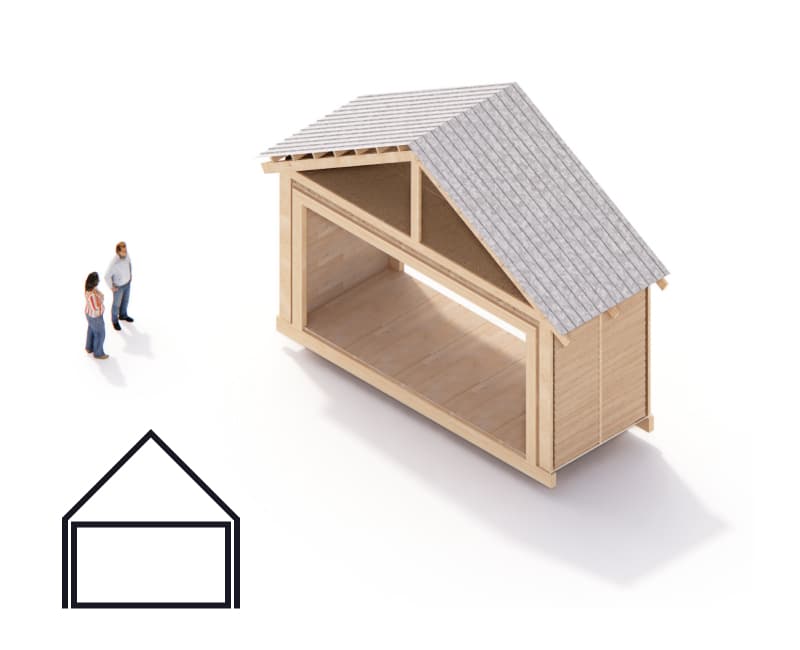
Flat ceiling
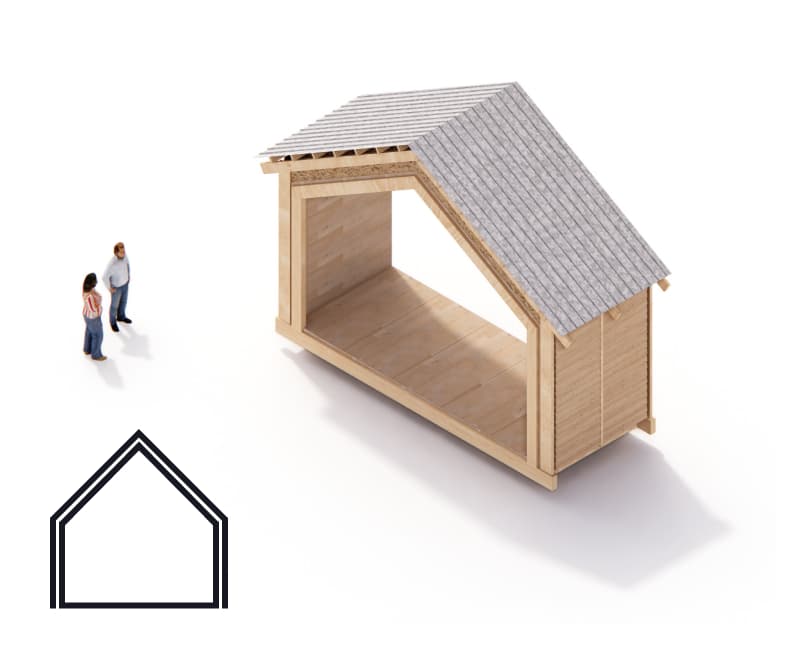
Tall ceiling
Vertical Scaling: Two-Story Configurations
The CLT-Light building system can be effortlessly adapted for two-story designs. Fundamentally, this configuration operates as a vertically expanded version of the core framework, seamlessly integrating a structural intermediate floor deck. This approach empowers developers to double the usable floor area while maintaining a highly efficient, minimal site footprint.
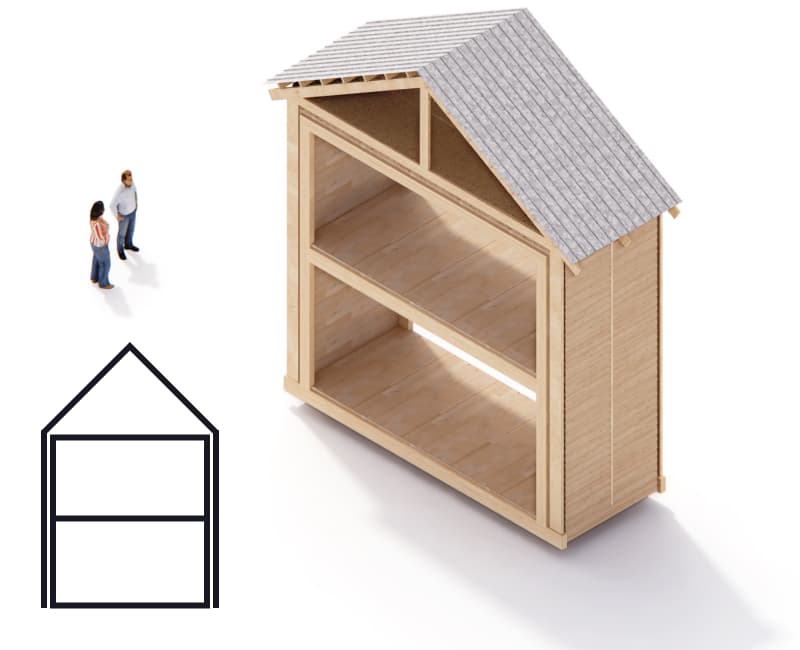
Flat ceiling
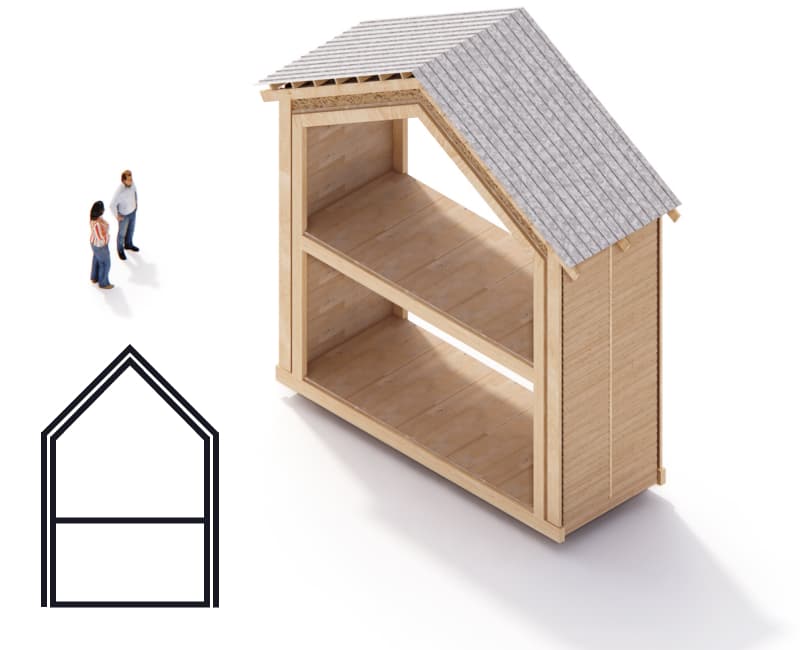
Tall ceiling
The Advantages of Pitched and Single-Slope Roofs
Pitched and single-slope roof configurations offer substantial benefits for both developers and end-users:
Superior Weather Protection
These structural designs provide an excellent defense against environmental hazards. They efficiently shed water, heavy snowpack, and debris, eliminating the risk of moisture pooling and subsequent structural leaks.
Thermal Efficiency & Ventilation
The sloped architecture inherently promotes natural airflow between the exterior cladding and the building's core thermal envelope. This continuous ventilation optimizes thermal performance and translates to long-term energy savings (OpEx).
Cost-Effective Modernity (Single-Slope)
Single-slope roofs deliver a striking, contemporary aesthetic while remaining highly cost-effective. Their simplified structural engineering requires fewer materials, directly reducing upfront construction costs (CapEx).
Streamlined Rainwater Management
Both roof typologies facilitate directed water runoff and can be seamlessly integrated with sustainable rainwater harvesting systems.
Maximized Spatial Volume
These roofing styles unlock additional functional space within the same footprint. Traditional pitched roofs allow for attic conversions and extra storage, while single-slope designs dramatically maximize the interior spatial volume through soaring ceiling heights.
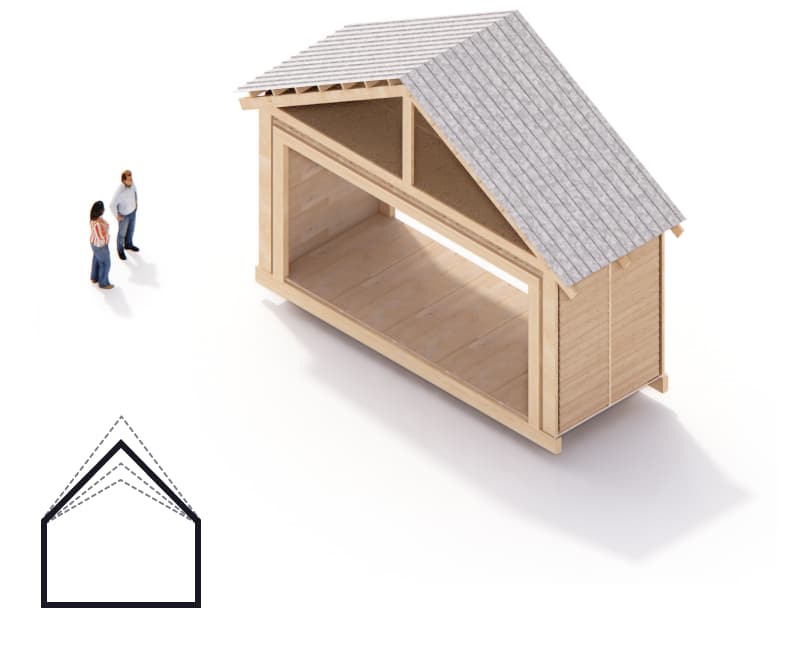
Pitched Roof
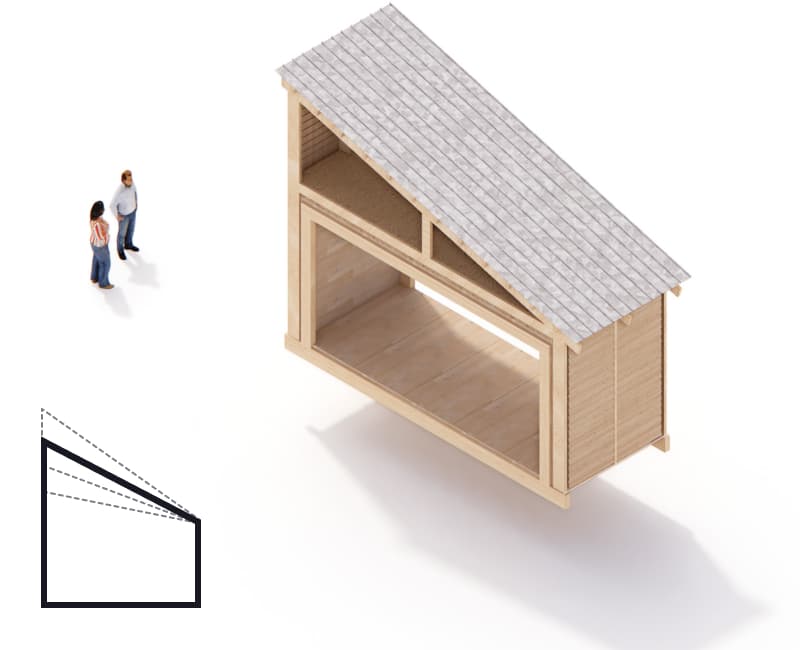
Tall ceiling
Architectural Versatility & Housing Typologies
By pairing customizable floor plan outlines with various roof profiles, the system generates a multitude of unique architectural volumes.
The inclusion of diverse housing typologies within this catalog reflects a deep understanding of modern real estate demands. We emphasize designs that promote efficient spatial density (maximizing site yield) while remaining highly adaptable to specific community needs—whether that involves rural development projects or building in remote, hard-to-reach locations.
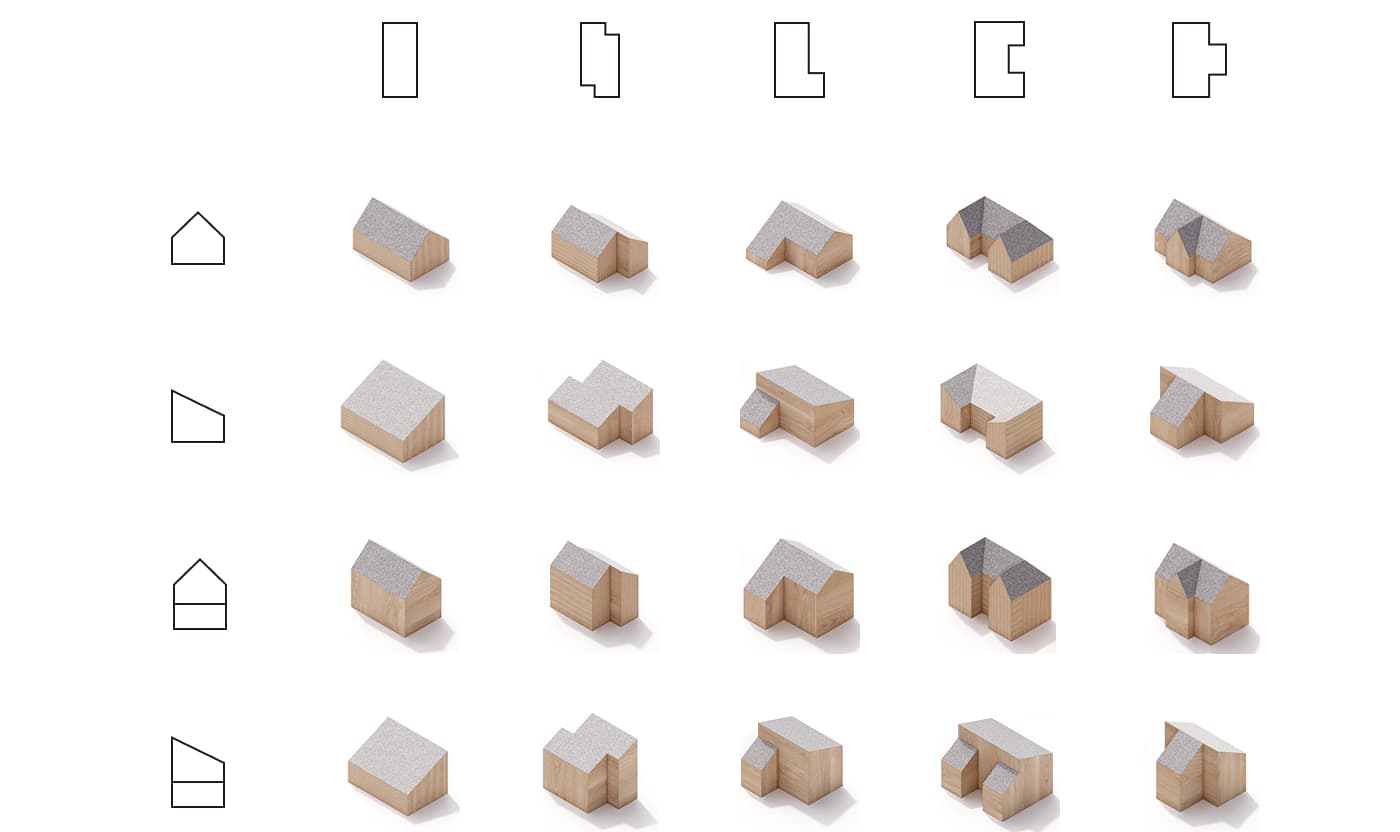
Architectural Generation Matrix: pairing floor plan outlines with roof profiles