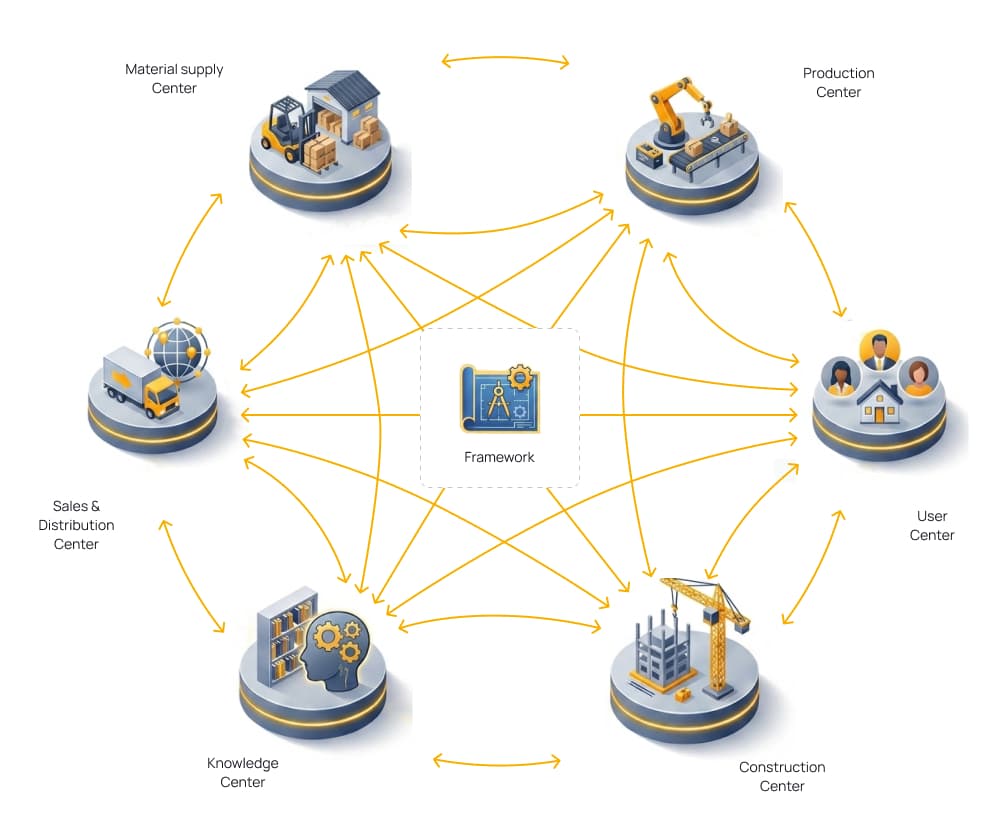
From a linear collaborative process to a centric model
The overall initiative is to support the building sector in producing more homes faster. Currently, homes are being built at a pace not seen in decades. But to solve today’s challenges and meet rapidly growing demand, we need to build even faster.
The challenge is that traditional construction is planned in a linear collaboration model with a linear transfer of responsibility and risk. The various decision-making processes are separated into short phases with different actors, success criteria, contracts, transactions, risk profiles, and incentive structures.

Why the linear model no longer works
The sequential transfer of responsibility creates a "silo effect." Each participant in the process—from the architect to the contractor—protects only their own phase, and any inconsistencies slow down the entire chain. This inevitably leads to missed deadlines, budget overruns, and compromises in quality.
To radically accelerate construction and guarantee a predictable outcome for investors, we are shifting the paradigm. We are moving to a Centric Model of collaboration. Instead of a long relay race of approvals, we unite all processes, stakeholders, and technologies around a single product: our standardized architectural system.
Integration over fragmentation
We are replacing a broken chain of responsibility with a unified, product-centric ecosystem