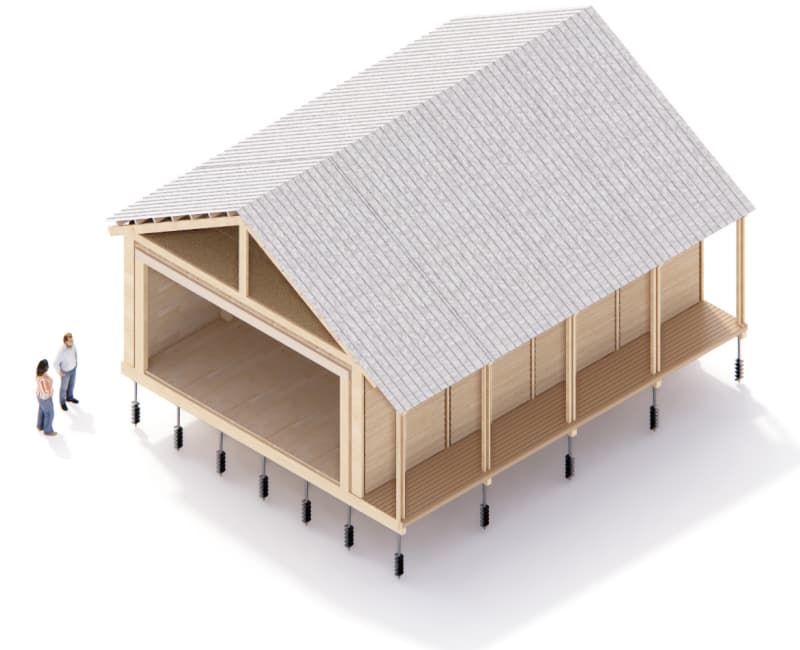
CLT & GLT Technology
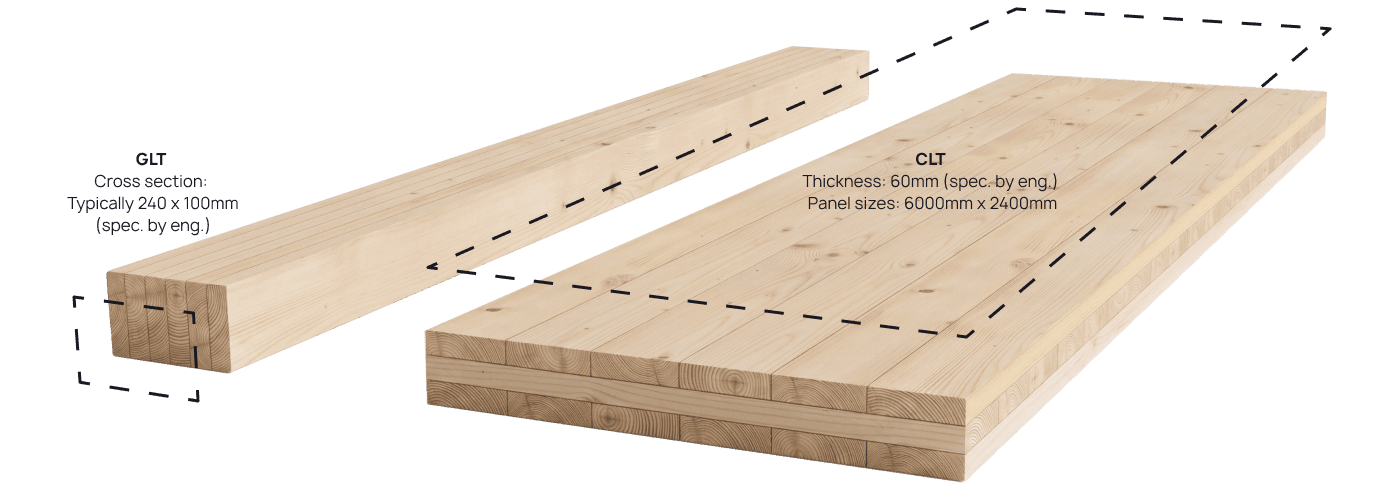
CLT (Cross-Laminated Timber) and GLT (Glue-Laminated Timber, also known as Glulam) are both engineered wood products, but they differ in their structure and primary applications.
CLT is made by cross-laminating several layers of timber perpendicular to each other. It consists of an odd number of layers glued together, with each outer layer alternated at 90-degree angles. In this project the CLT is primarily used for walls, floors, floor separation and ceilings.
The GLT, on the other hand, is made by bonding and gluing laminates together with the grain running in the same direction. This process allows for the production of larger and longer length members. GLT is used for the load-bearing frame in this project, such as beams and columns.
The Hybrid Solution
Working with an interior frame of GLT with a thinner 60mm CLT layer will save up to 50% of the material that is typically used in a standard CLT house. At the same time the building elements can be optimized so that there is close to 0% waste.
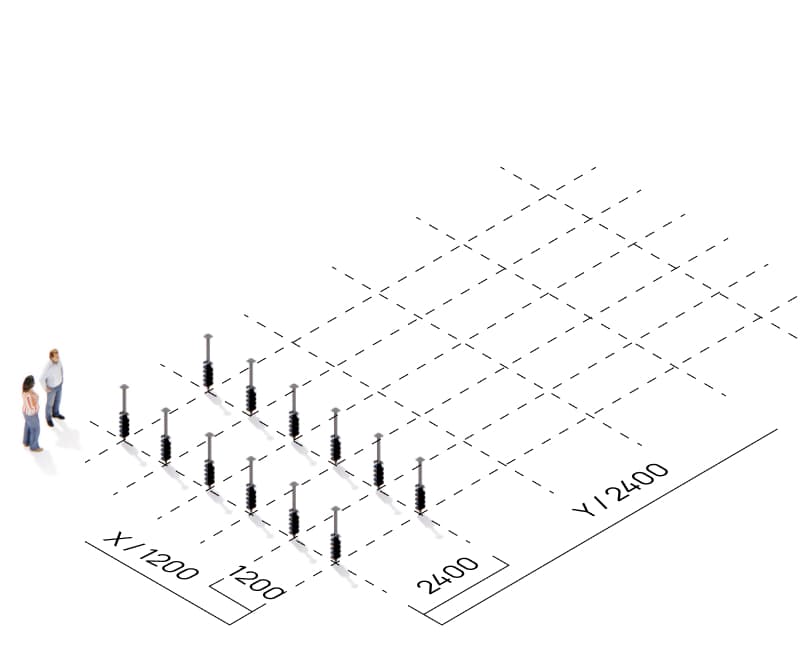
Screw Piles
The pace and predictability of the entire development are set at ground zero. We utilize a highly efficient steel screw pile foundation perfectly synchronized with our modular CLT-Light system. Piles are positioned on a strict geometric grid, divisible by 1200mm in both X and Y directions. This engineered precision guarantees absolute alignment for the prefabricated components, eliminating the need for on-site adjustments.
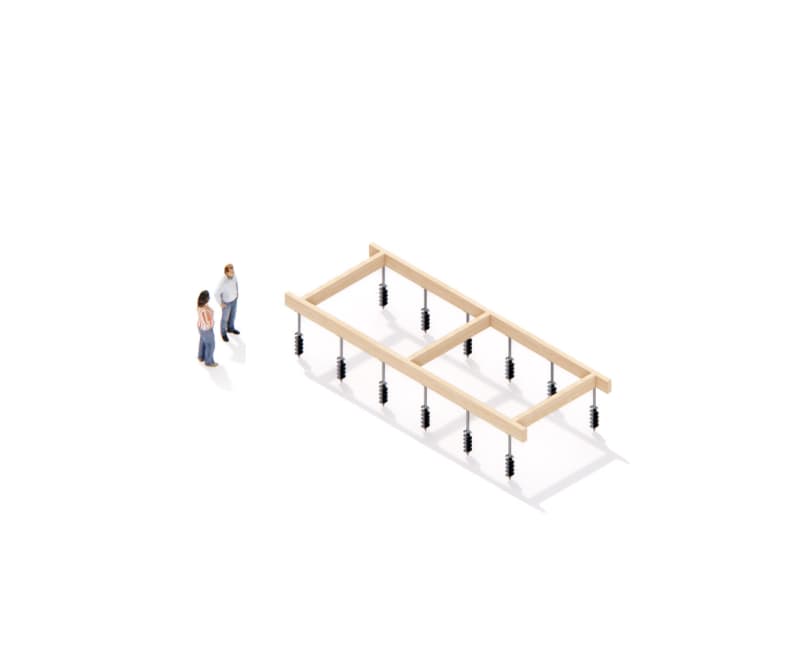
Pressure-Treated Timber Base Frame
Once the screw piles are in place, the base frame is installed—acting as the critical structural interface between the steel foundation and the premium CLT superstructure. This foundational grid is constructed exclusively from pressure-treated or naturally rot-resistant timber. It establishes a perfectly leveled, highly durable platform designed to support the rapid assembly of the prefabricated modules above.
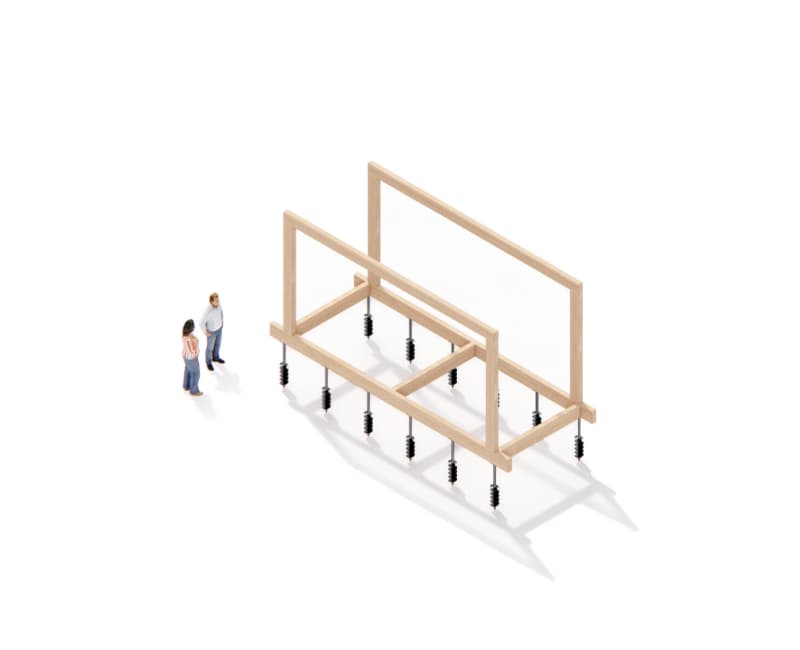
Structural GLT Portal Frames
With the base frame secured, the primary load-bearing "skeleton" of the building is erected using Glue-Laminated Timber (GLT) portal frames. Consisting of heavy-duty columns and beams, this highly engineered system efficiently manages both vertical and lateral (wind) loads. The integration of portal frames is the key to delivering premium, high-value real estate with a modern spatial dynamic.
Floor Insulation & Envelope Performance
Following the erection of the structural frame, the building's thermal envelope begins to take shape. High-performance insulation material (batts) is meticulously fitted between the floor joists. This crucial stage is engineered to guarantee superior energy performance, acoustic comfort, and strict compliance with local building regulations. A properly constructed floor assembly ensures zero heat loss and maintains an optimal indoor microclimate.
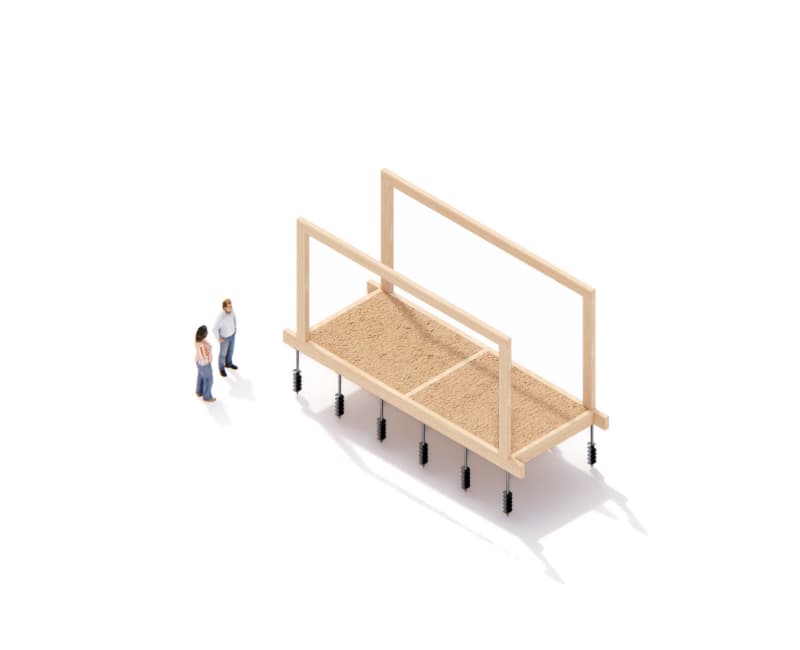
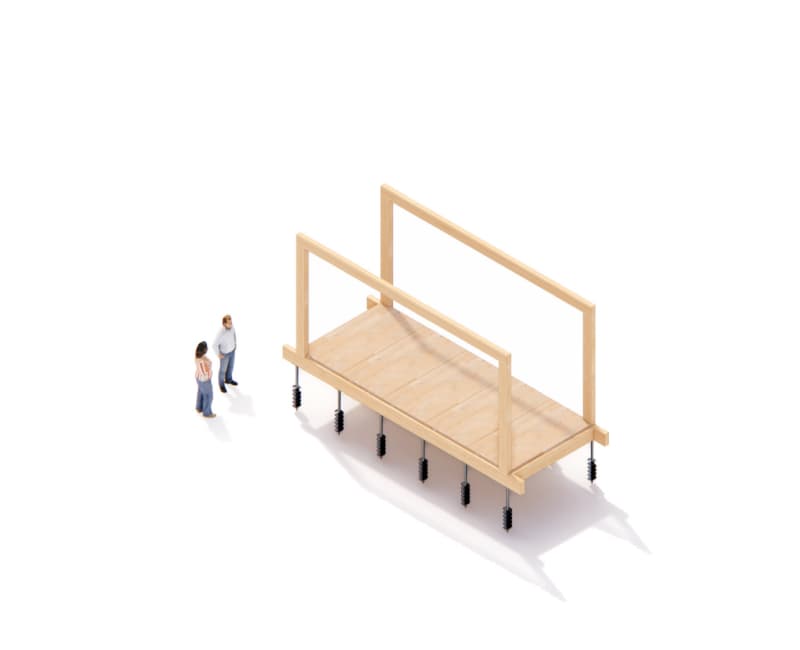
CLT Floor Board Installation
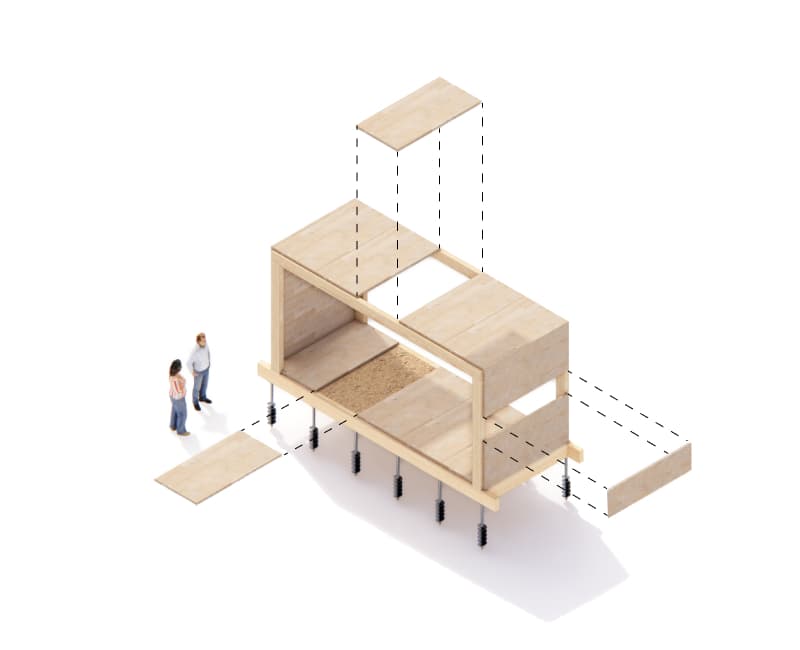
Over the insulated joist structure, engineered CLT-Light floor boards (standardized at 1200 x 2400mm) are laid down to create a perfectly flat, rigid platform (subfloor) for the subsequent wall erection. The application of Cross-Laminated Timber technology at this stage dramatically enhances the structural integrity and diagonal shear strength of the entire building.
CLT Wall Board Installation
With the subfloor platform secured, compact CLT-Light wall boards (1200 x 600mm) are integrated into the structure. At this stage, the GLT portal frames and the floor assembly are locked together. These wall components act as critical shear walls, completing the monolithic structural core of the building and providing final lateral stability against environmental forces.
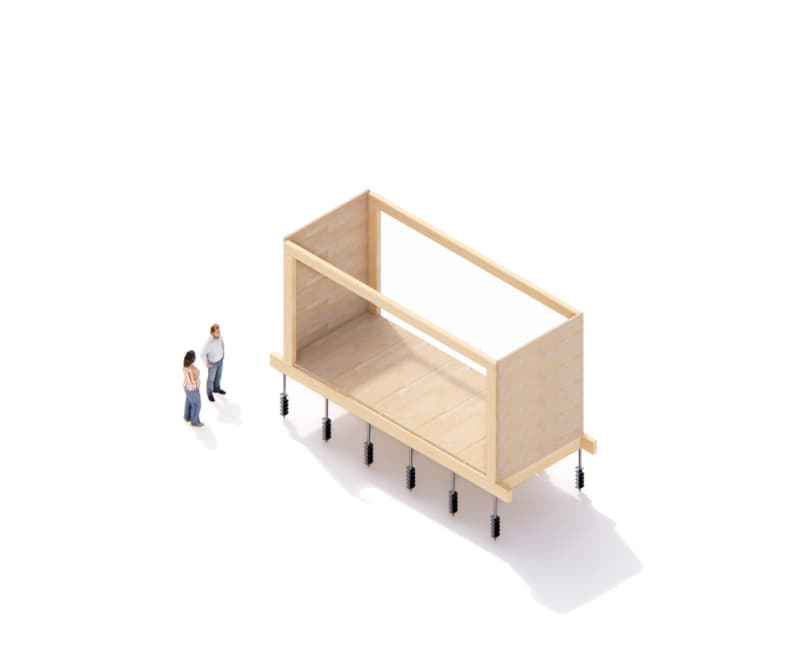
CLT Ceiling Board Installation
The final step in assembling the building's volumetric framework is the installation of the CLT-Light ceiling (roof deck) boards. Utilizing the standard 1200 x 2400mm modular format, these panels are laid directly onto the structural GLT portal beams. This securely closes the building envelope from above, providing an incredibly robust substrate for the final roofing assembly.
Outer Wall Joists & Envelope Framing
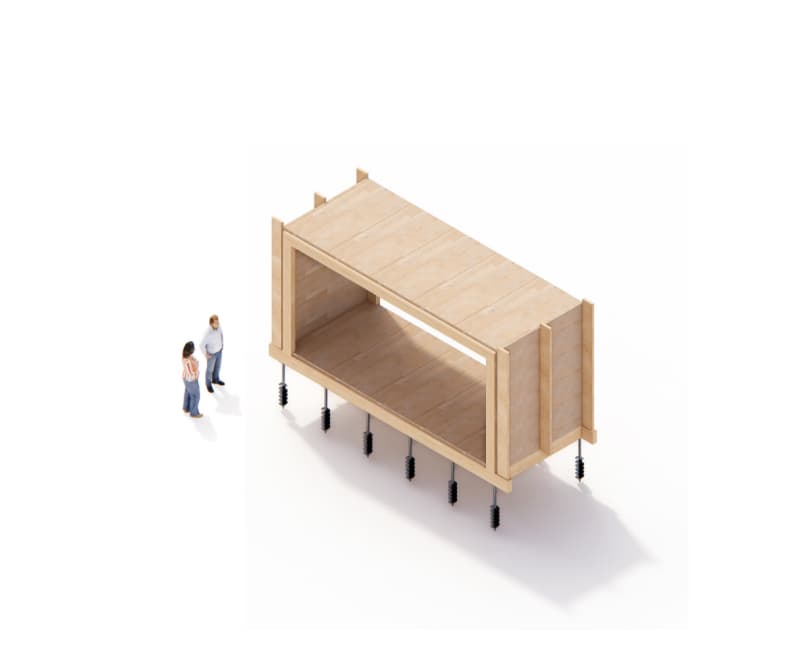
Once the solid CLT structural core is erected, the external framing (outer wall joists) is installed. This versatile sub-structure serves a triple purpose: it is engineered to house and support the insulation layer, securely hold the exterior cladding, and provide crucial bearing for the roof trusses.
Prefabricated Roof Trusses
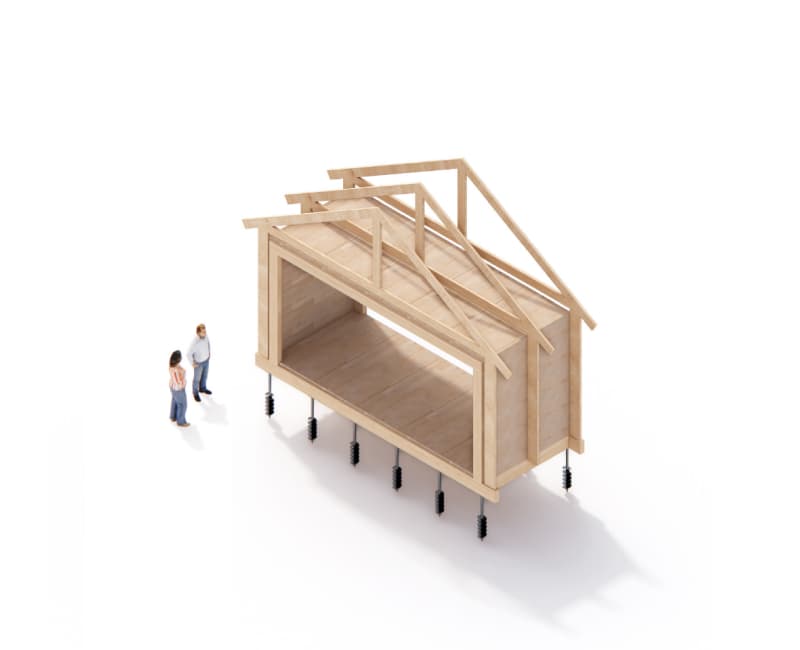
The culmination of the structural envelope is the installation of prefabricated roof trusses. These highly engineered components are positioned directly on top of the GLT portal frames and the external wall joists. The trusses define the final architectural roofline and provide an exceptionally strong substrate for the roofing system, seamlessly unifying all load-bearing elements of the building.
Wall Insulation & Envelope Weatherproofing
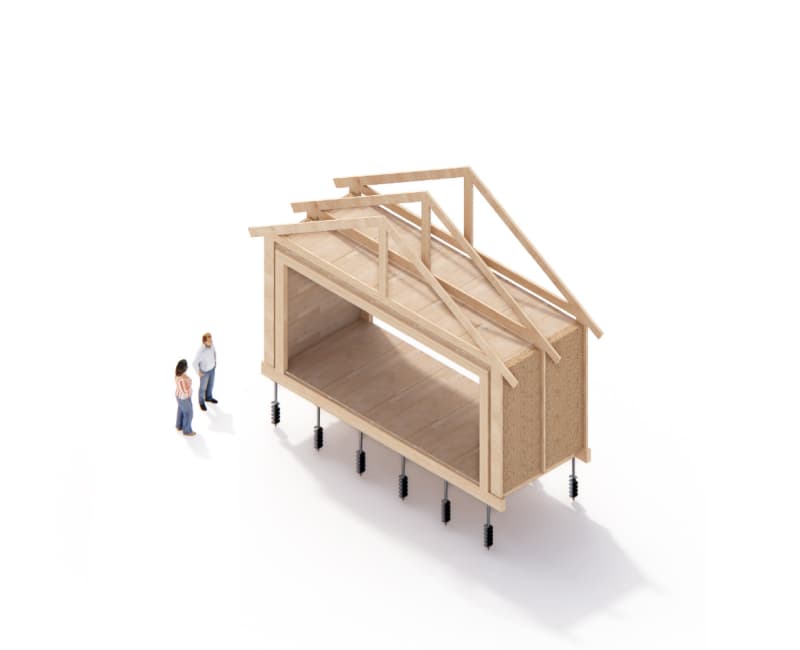
At this stage, the building's thermal envelope is fully actualized. High-performance insulation material is meticulously fitted into the external framing on the outside of the CLT panels. The entire insulated facade is then wrapped and sealed with a continuous windbreaker membrane. This engineered assembly transforms the mass timber core into an ultra-energy-efficient, climate-resilient structure.
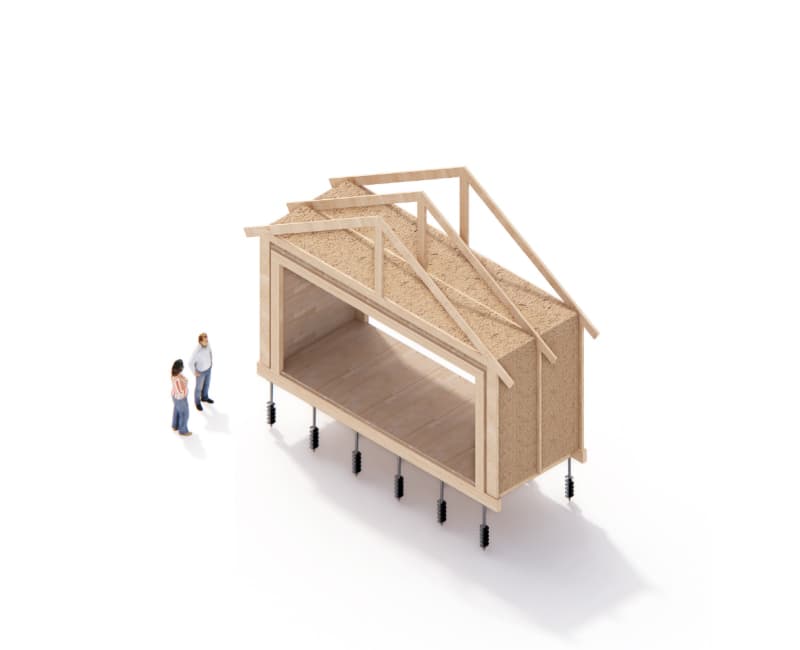
Roof Insulation & Envelope Sealing
At this stage, the building's thermal envelope is securely capped off from above. High-performance insulation material is fitted directly onto the topside of the CLT-Light ceiling panels. This specific roof assembly configuration not only delivers exceptional energy efficiency but also safely allows the natural mass timber aesthetic to remain exposed within the interior spaces.
Prefabricated External Cladding
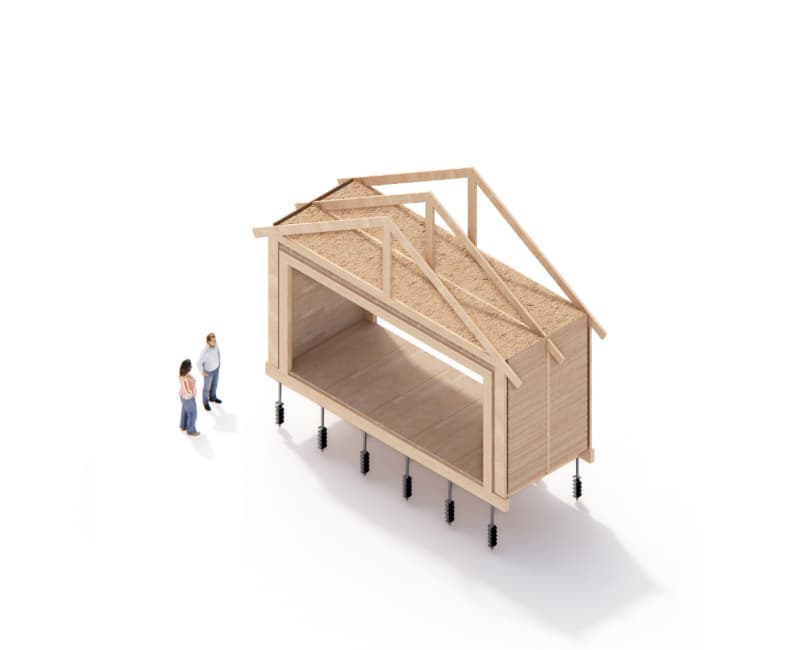
At this stage, the building receives its final architectural identity. Prefabricated exterior cladding panels are seamlessly positioned within the external wall joist system. The core engineering principle applied here is the rainscreen facade technique: a precisely calculated ventilation gap is maintained between the final cladding and the underlying windbreaker membrane.
Roof Batten Installation
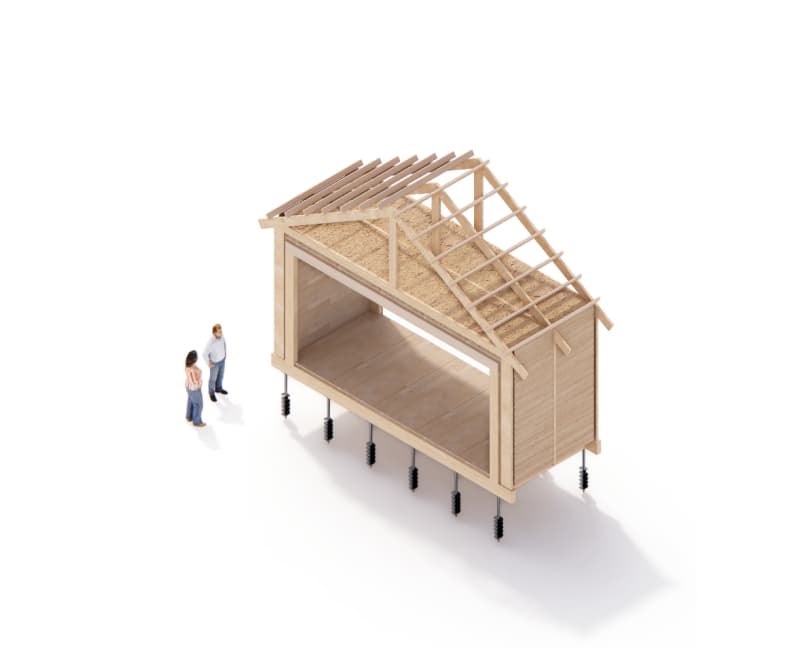
Following the erection of the roof trusses and the application of weatherproofing membranes, the roof battens are installed. This horizontal framework provides the direct fixing point for the final roofing material. Strict adherence to installation tolerances at this stage is critical to ensure the roof can withstand extreme environmental loads without deformation.
Premium Roof Finish
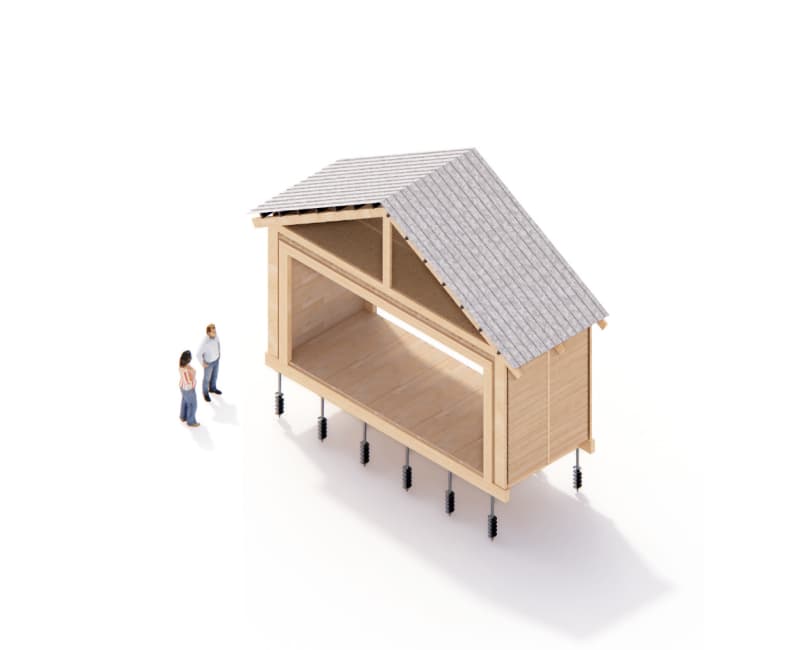
The installation of the final roof finish completes the building's exterior envelope. Mounted directly onto the batten framework, the roofing material serves as the primary shield against the elements. For CLT-Light projects, we prioritize high-performance metal cladding (steel or aluminum), perfectly complementing the modular architecture with superior weather resistance and a striking modern aesthetic.
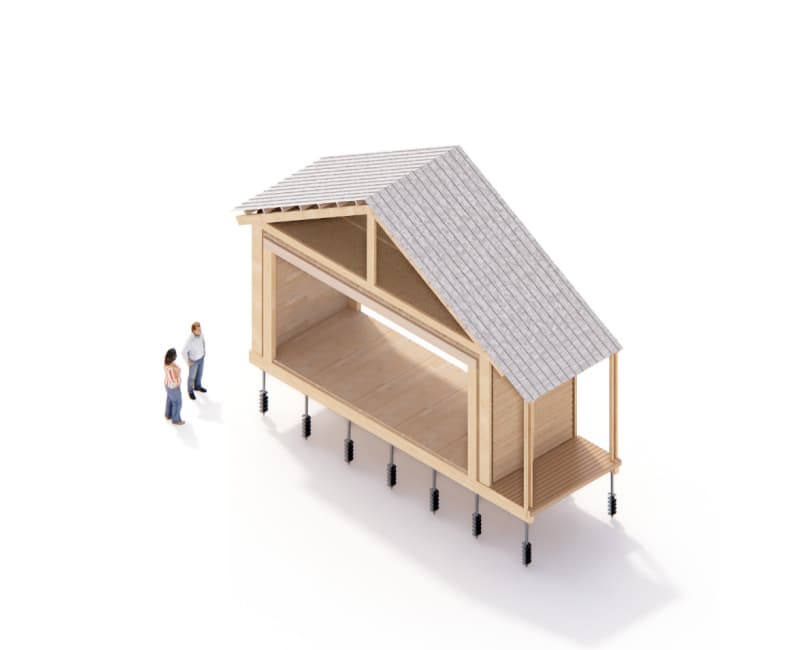
External Side Extensions & Terraces
The inherent modularity of the CLT-Light system makes it remarkably easy to scale the project footprint through the addition of external side extensions, covered verandas, decking, or pergolas. These elements are integrated seamlessly during the final stages of construction, bolting directly onto the primary structural framework to enhance the building's functionality.
Linear Scaling
The CLT-Light architecture is built on a smart, modular framework. You are not locked into a single, rigid floor plan. Instead, the building's footprint and layout can be highly customized during the design phase. The core module scales linearly by adding standardized 2.4-meter blocks, empowering you to configure the exact product required for your business model.
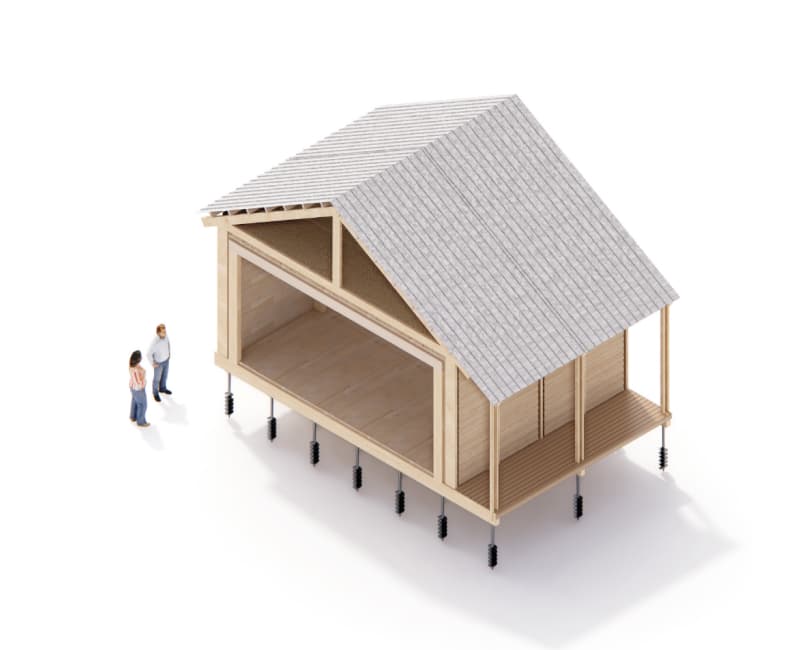
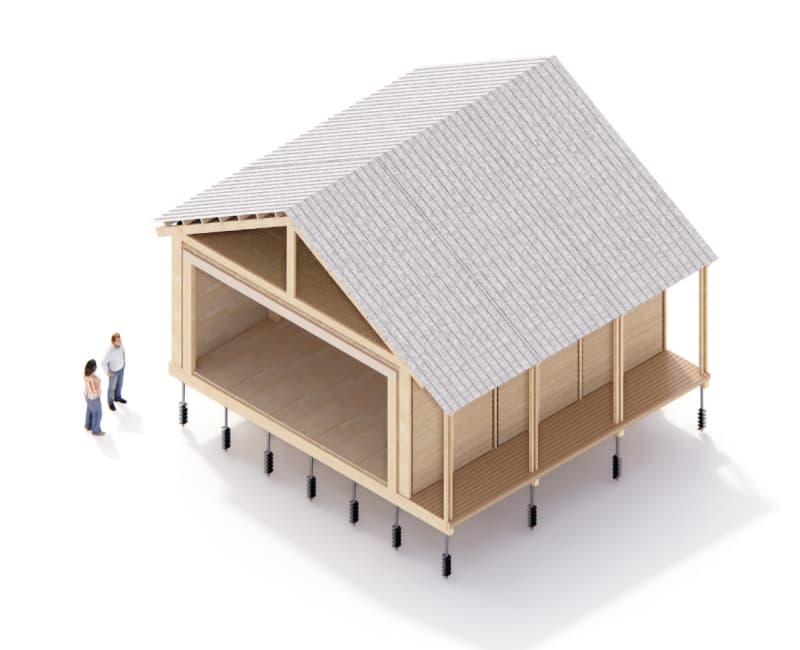
The 2.4-meter extension increment is not random—it is an optimized ergonomic module. By adding blocks during the design phase, you are not merely lengthening the building; you are introducing entirely new living scenarios for your future residents or guests. A developer can build an entire diversified product line using just one core architectural system.
Linear expansion in 2.4-meter blocks is not limited to enclosed, insulated living spaces. This modular freedom empowers developers to craft complex, multi-functional assets by balancing indoor and outdoor environments. You decide the purpose of every new grid segment: a heated bedroom, an open-air patio, or a dedicated commercial amenity.